New York’s Museum of Modern Art (MoMA), a longtime GBA client, has been honored in two categories of the World Championship for Energy Savings, a Global Alliance for Buildings and Construction initiative. The American division of the World Championship is the USA National Energy League, managed by the US Green Building Council.
GBA’s collaboration with the museum, building on the firm’s initial effort commissioning the LEED Platinum Geffen Wing, has resulted in a comprehensive, campuswide retrofit strategy, driving continuous energy efficiency improvements. The resulting verified data have earned MoMA the Deep Emissions Reduction Award and the Most Improved Energy Use Award in the World Championship. Buildings from 16 countries entered the prestigious competition.
MoMA’s achievements were celebrated during the Global Impact Summit at the recent Greenbuild International Conference & Expo and were further recognized at a recent ceremony in Turkey.
Planning for Change in a Complex Campus
Beginning in 1939 with the Goodwin-Stone building, the museum campus has grown to encompass multiple facilities totaling 743,825 square feet. Its existing systems, which must operate 24/7/365, include a central chiller plant, 237 air-moving units, district steam, and more than 300,000 building automation system (BAS) control points.
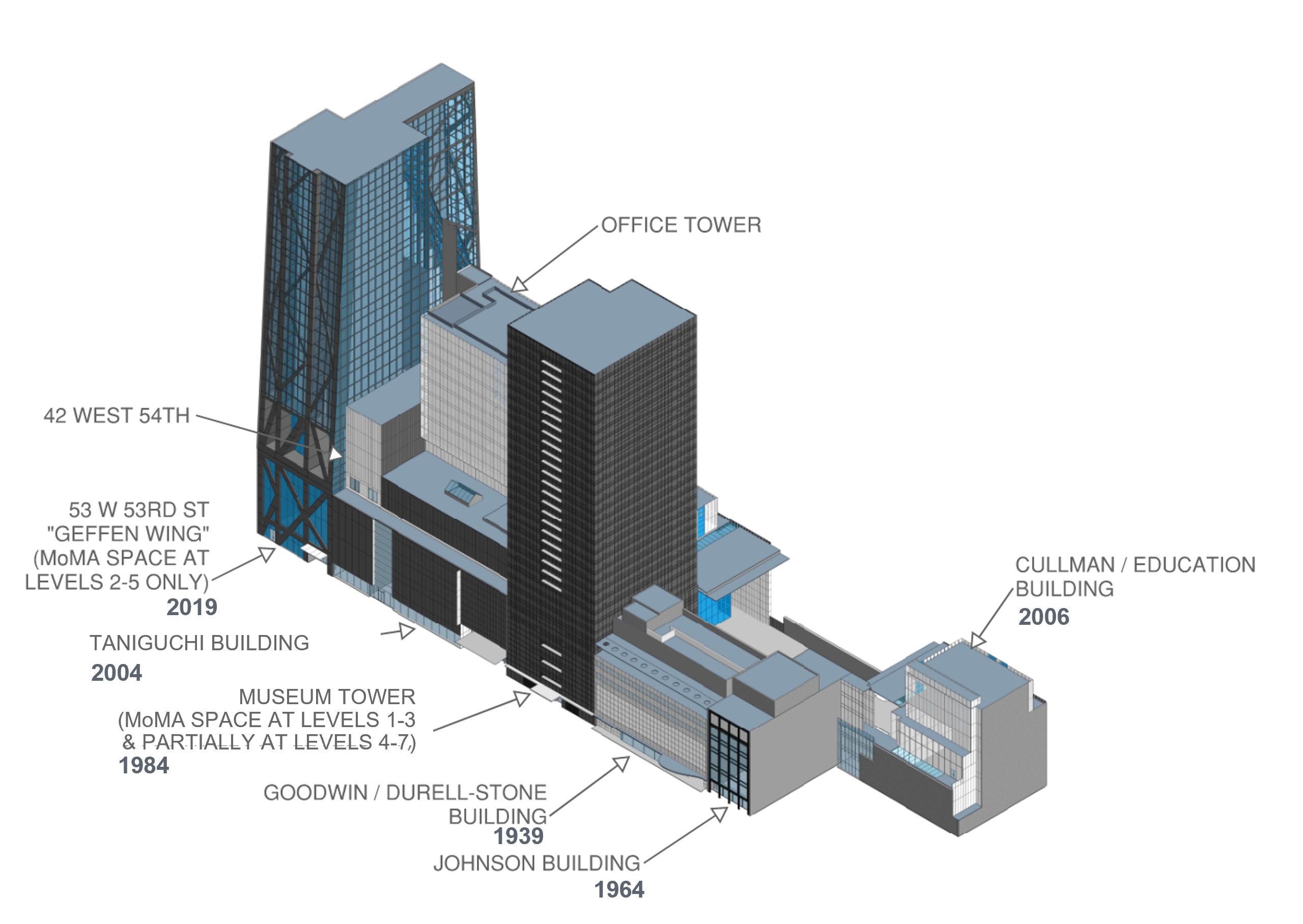
Beginning in 1939, the museum campus has developed gradually, with the most major addition consisting of the LEED Platinum Geffen Wing.
MoMA’s comprehensive new capital plan was prompted in part by New York City’s passage of Local Law 97, which imposes gradual carbon intensity limits on large buildings, with heavy fines attached for noncompliance. Equipment at or nearing end-of-life, with associated concerns about reliability and risk, was also a major factor in the museum’s planning.
A GBA energy study, retro-commissioning project, and facility assessment helped shape a holistic replacement and upgrade strategy, including targeted maintenance, BAS adjustments and repairs, and major phased improvements to the HVAC systems and lighting equipment.
In addition, the planning process included a thorough examination of the museum’s existing setpoints for temperature and humidity, leading to changes developed through extensive conversations with staff. Adjustments were also influenced by the Bizot Green Protocol, a worldwide guideline for energy-efficient museum operations designed to protect collections and loans while reducing energy consumption.
The overall emissions- and energy-reduction program included three tracks: capital projects (necessitated by end-of-life replacements and resilience priorities); targeted energy reduction (discrete projects with simple paybacks under five years); and operational optimization (low- and no-cost changes to improve sequences and procedures). The capital projects account for 51% of the energy reduction and would have been necessary regardless of regulatory pressure or institutional sustainability goals.
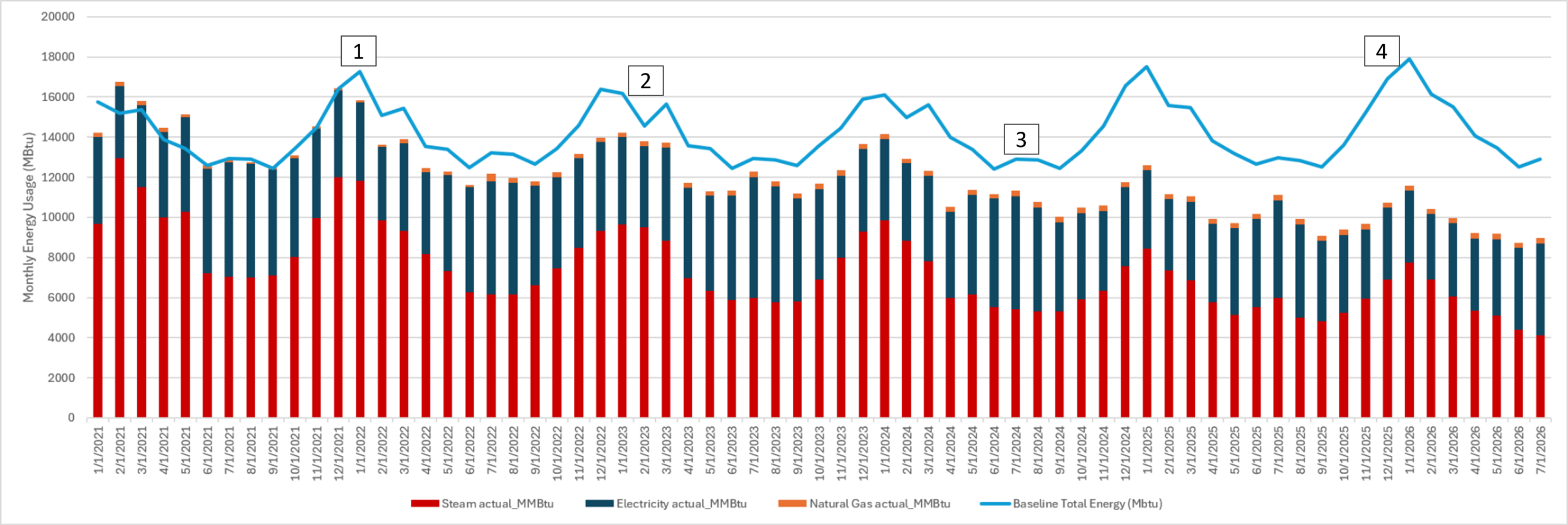
Milestones and energy use impacts vs. baseline, 2021 to 2026. 1 = Retro-commissioning and control setpoint adjustments; 2 = Steam PRV installation and lighting upgrades; 3 = BAS controls upgrade 50% complete; 4 = BAS controls upgrade 100% complete.
Measurable Impact
Gauged against a 2019 baseline, results through 2026 have included a 31% reduction in electricity use; a 36% reduction in district steam use; a 34% reduction in MMBtu/year; a 36% reduction in kBtu/square foot/year; and a 33% reduction in carbon (eCO2/year). Utility incentives and foundation grants were leveraged to cover about 20% of costs to date. The carbon reduction far surpassed LL97’s 2024 emissions reduction requirements of 14% and are on track to beat upcoming 2030 requirements (50%).
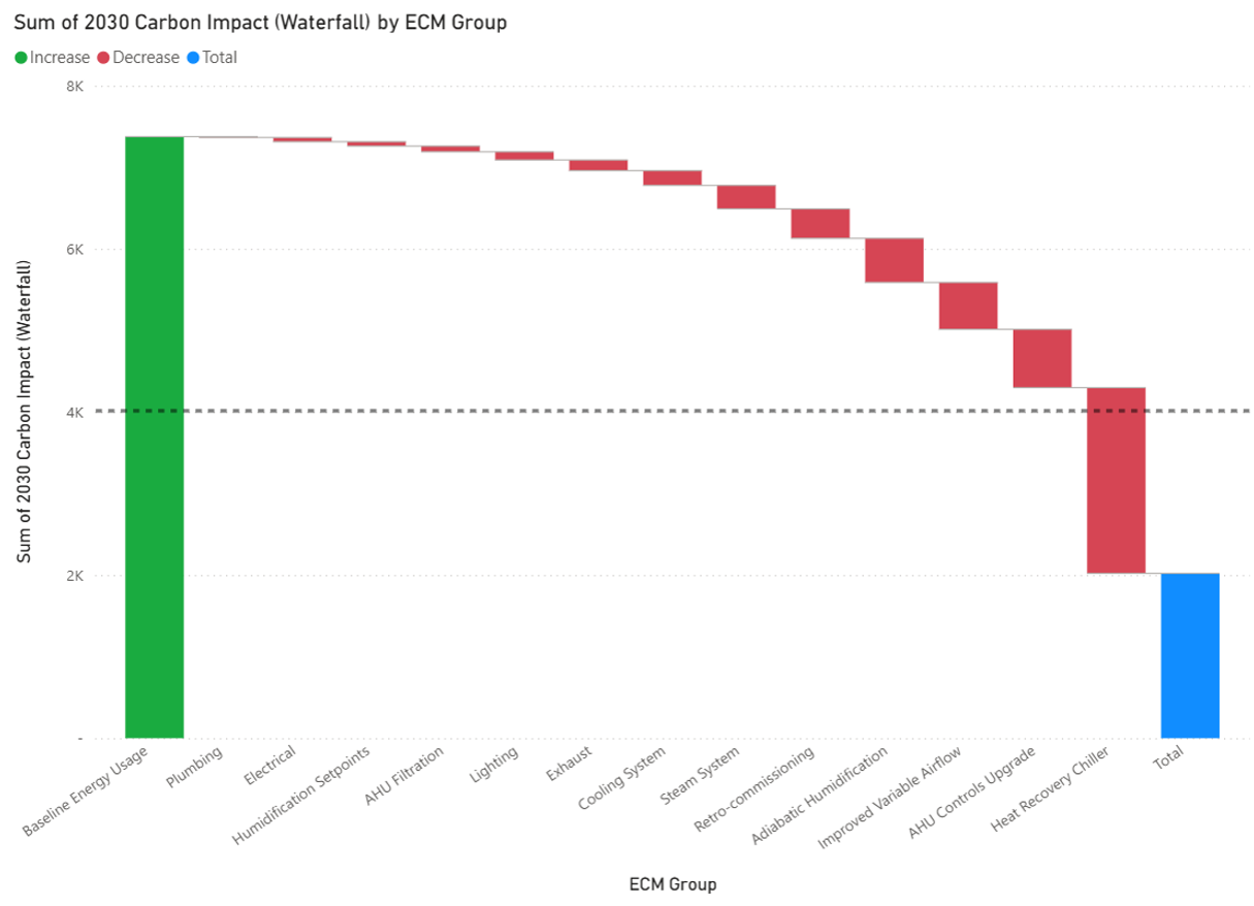
A graphic depiction of the plan to meet the LL97 2030 50% carbon reduction requirement. The chart shows the carbon-reduction impact of grouped energy conservation measures (ECMs), including various controls, systems, and equipment improvements. Upcoming installation of a heat pump chiller will play a major role in MoMA’s ability to achieve the 2030 goal.
Ongoing utility monitoring, energy metering, and fault detection and diagnostics using GBA’s Trend Sumo® platform are crucial tools for measuring and verifying progress and for ensuring persistent energy savings.
GBA congratulates MoMA on its far-sighted analysis and its world-class commitment to making major sustainability improvements while always safeguarding visitors, staff, and the permanent and loaned collections. Though museums are unique, the lessons learned through this collaboration are broadly applicable to many building types, including high-energy intensity facilities such as hospitals, labs, academic buildings, data centers, and multifamily and hotel buildings.
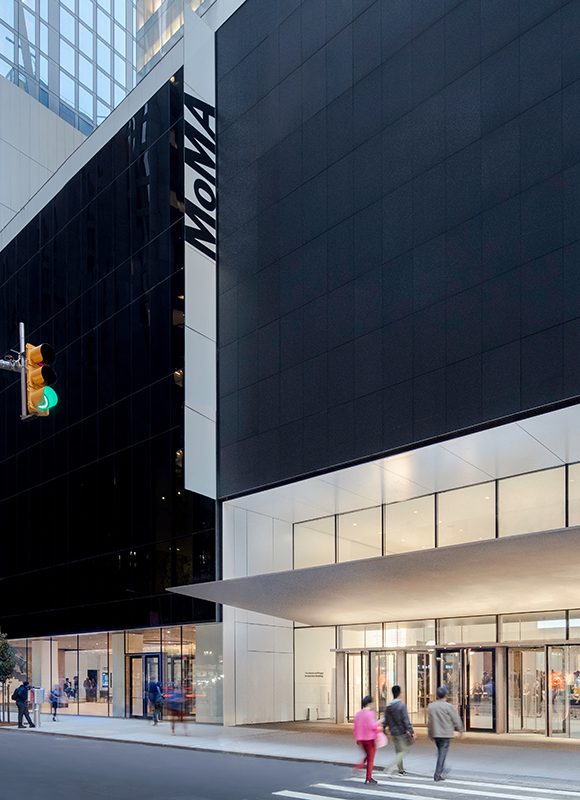
Exterior photo: Brett Beyer