By Tim Shinnick, PE, QCxP, CEM, Associate, and Justin D’Arcy, PE, Director of Analytics
After data centers, labs are one of the most energy-intensive building types. The average lab building consumes five to six times as much energy per square foot as a typical office building, and twice that of a typical acute-care inpatient hospital. Some labs and cleanrooms have an energy-use intensity much higher than that average.
Why are labs so energy-intensive?
- Most lab building HVAC systems operate 24/7/365, regardless of occupancy.
- Labs often have high airflow rates due to once-through ventilation.
- Labs often have high electrical plug loads for equipment, such as low-temperature (-80°C) freezers.
Most labs are ripe for analysis to target energy efficiency and decarbonization without compromising health, safety, or experiments. An automated fault detection and diagnostics (FDD) platform can be a powerful tool in the quest for more sustainable, reliable, economical operations.
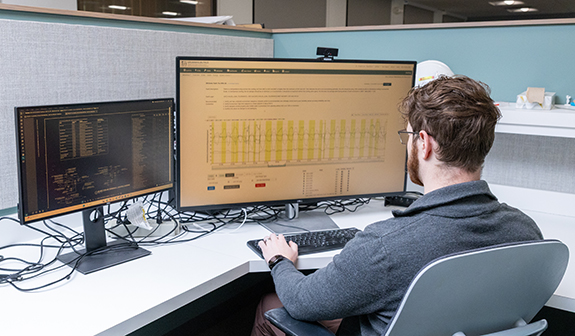
Trend Sumo®, Grumman|Butkus Associates’ in-house FDD software application, is an advanced analytics platform focused on building automation system (BAS) trend data. Trend Sumo leverages the power of automation to clean, organize, and analyze large quantities of data. The platform ingests data from the BAS and conducts an in-depth review for each HVAC system to pinpoint operational inefficiencies that can lead to energy loss or occupant discomfort.
Laboratory Energy Savings
Typical opportunities for energy savings in lab settings include the following:
- Maintain heat recovery system operation. Heat recovery systems provide significant energy savings opportunities. Inaccurate temperature or humidity sensors, failed control valves, or overridden control setpoints will compromise heat recovery efficiency. The system will likely continue operating without any apparent issues, not causing any alarms, but will have reduced efficiency resulting in higher energy costs. (Fig. 1 provides an example involving a fault in an energy recovery wheel, meriting investigation and corrective action.)
- Avoid simultaneous heating and cooling. Lab spaces have tighter temperature and humidity requirements than office areas. More humidification, dehumidification, and/or reheat energy are often needed. These processes require more sensors for control, leading to more ways system performance and efficiency can degrade, unless proper monitoring is provided with appropriate actions taken.
- Optimize control reset strategies. Lab equipment is sized for high design airflows, but systems often operate at lower conditions due to varying occupancy. Control system static pressure or discharge air temperature resets provide significant energy savings, allowing mechanical systems to match actual current demand rather than using excess energy. These resets utilize data from each zone in the building. If any space temperature or humidity sensors, terminal box dampers, or airflow sensors fail to operate correctly, whole-system efficiency will decrease. Trend Sumo identifies problem areas so the building team can focus attention on the appropriate equipment.
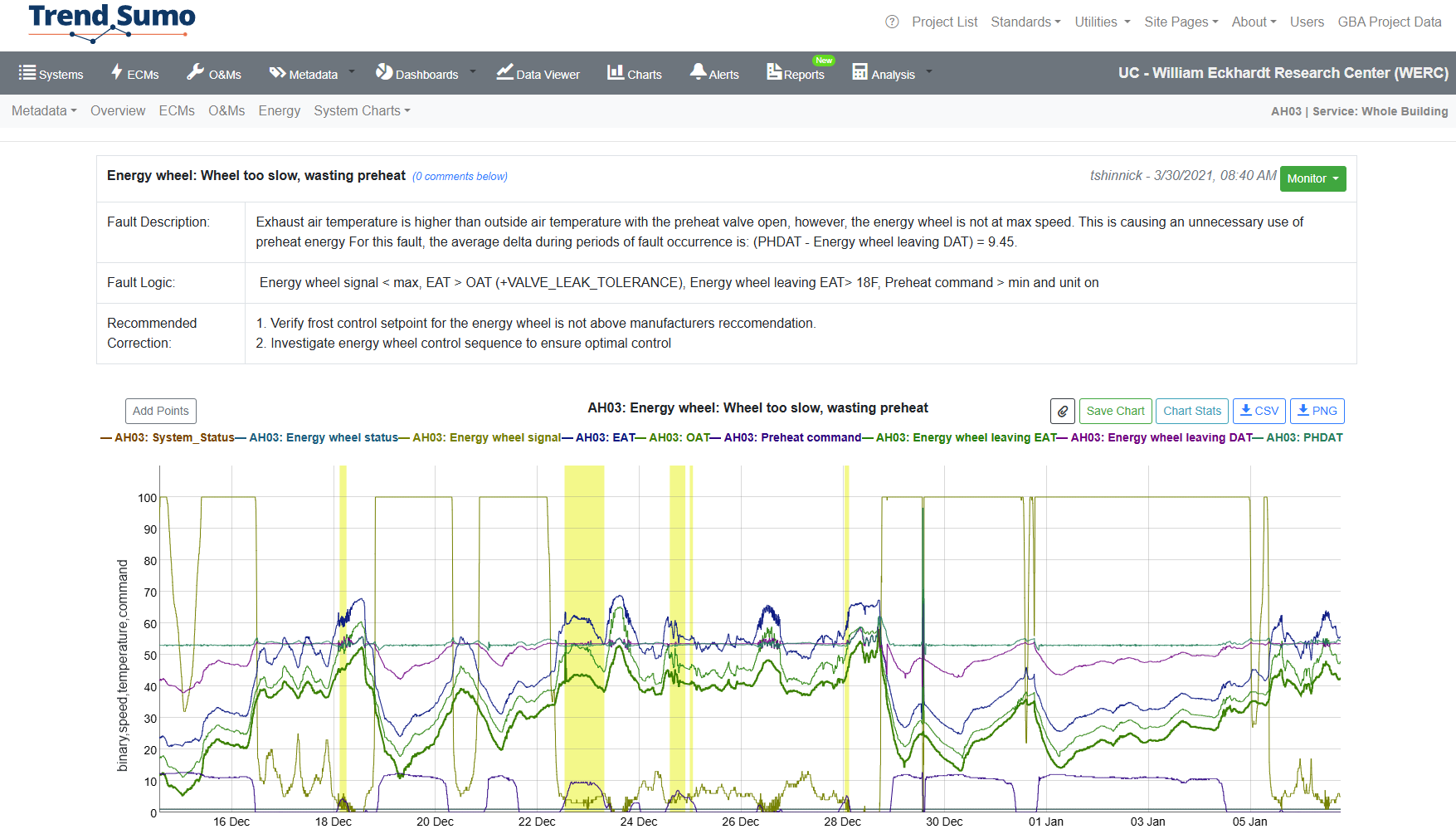
Fig. 1: Trend Sumo output indicating issues with an energy wheel during operation in December.
Shut the Sash Programs
Fume hoods can be a primary driver of energy consumption in laboratory buildings. “Shut the Sash” programs aim to motivate lab users to close sashes when fume hoods aren’t in use. An effective program demands analysis of fume hood usage data. Trend Sumo is the perfect tool for compiling this data, identifying hoods that need action, and creating visualizations that summarize performance over time. The team leading the sash initiative can then communicate with the end users to maintain momentum and sustain energy efficiency.
Compare average sash position vs. hour of the week over different time ranges to show the impact of the program (Fig. 2). View the data for specific fume hoods sorted by average amount open to quickly identify hoods that are left open for long periods of time (Fig. 3). View the data over several years to show the progress over time (Fig. 4).
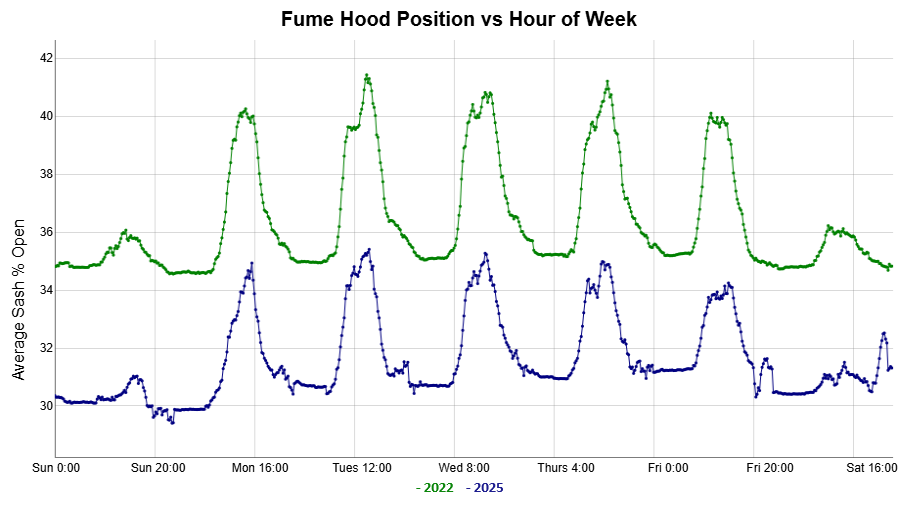
Fig. 2: Fume hood position from 2022 (green) and 2025 (purple) averaged by the hour of the week to show improvement.
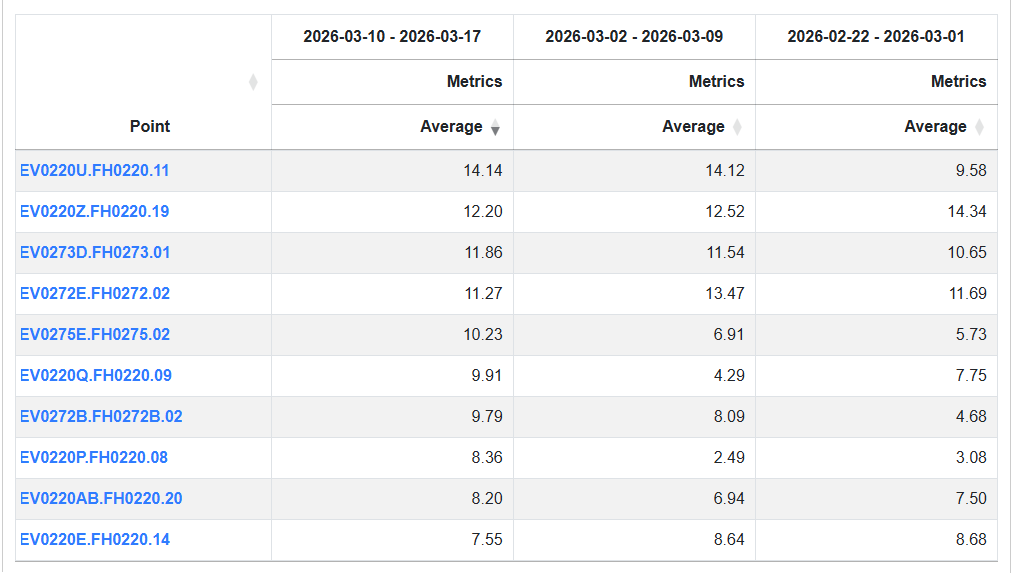
Fig. 3: Report of average fume hood amount open over time. Comparing three recent one-week periods.
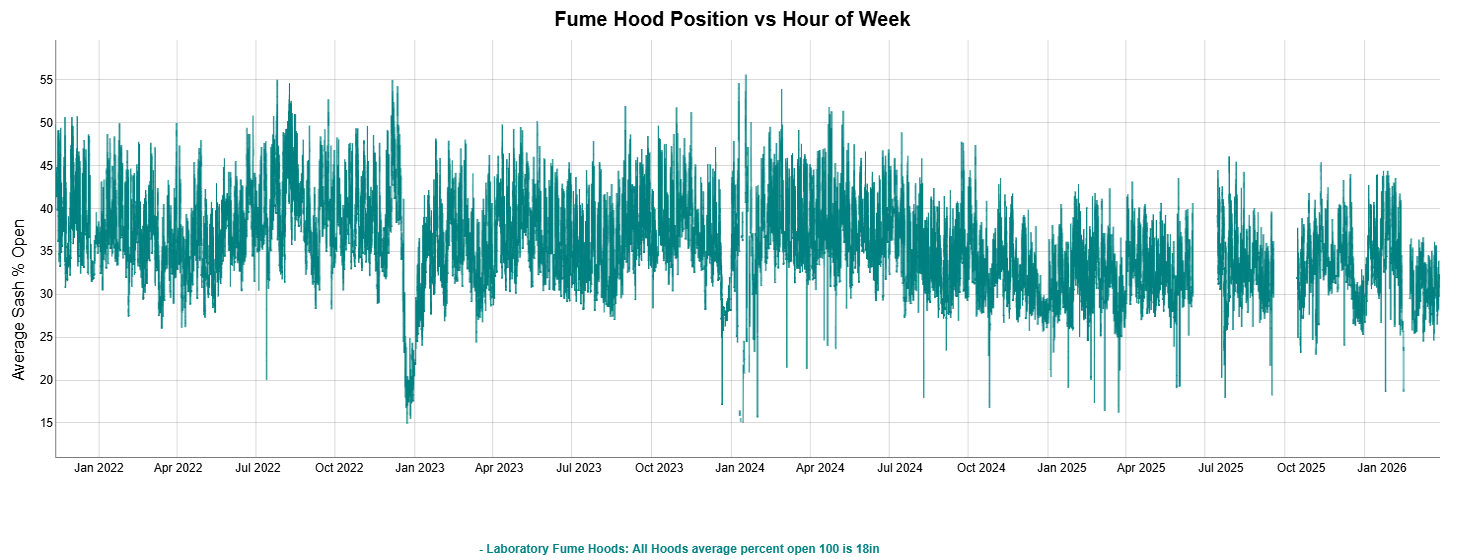
Fig. 4: A multi-year analysis indicates generally improved sash-shutting behavior between 2022 and 2026.
Conclusion
A fine line generally exists in laboratory facilities between protecting users and experiments via appropriate control of environmental parameters (temperature, humidity, pressurization, ventilation, particulate matter, etc.) and overly tight control that compromises energy efficiency. The stakes of equipment and system errors in the lab context can also be particularly high.
Applying FDD with Trend Sumo, plus input from our lab-sensitive engineering team, can help your facility operate at its best, supporting scientific or clinical objectives while conserving precious operational funds. Reach out so we can work with you to find the best solution for your most puzzling problems.