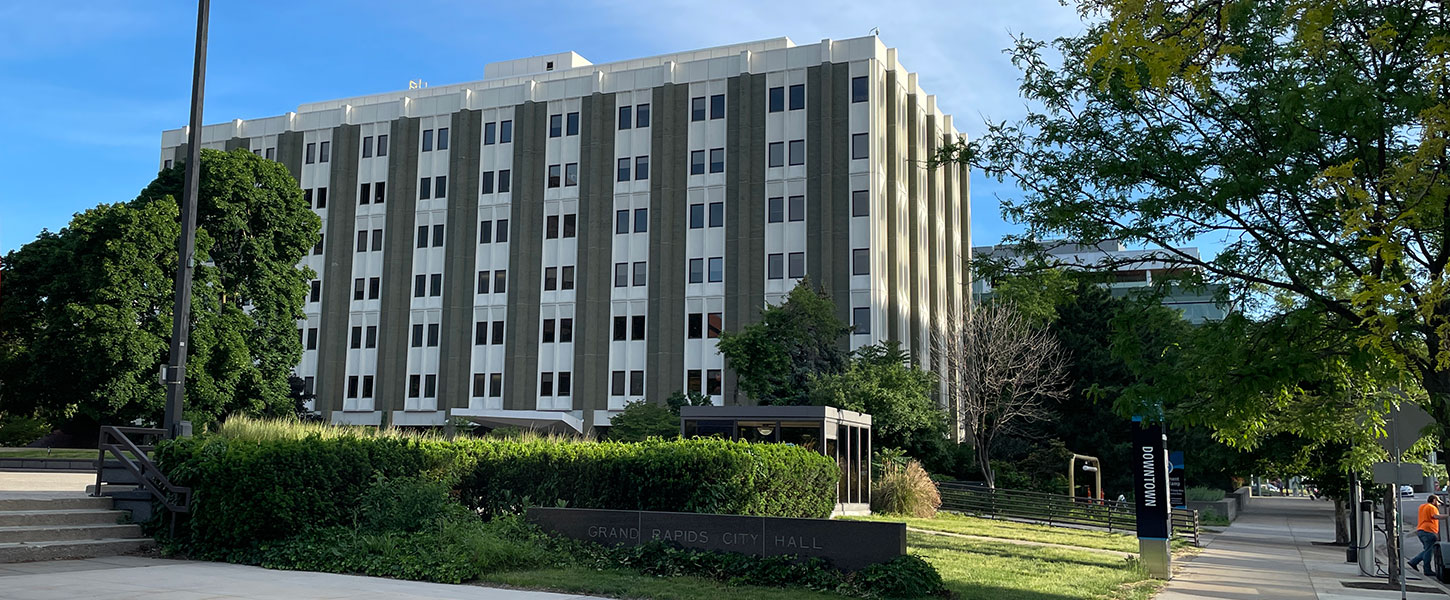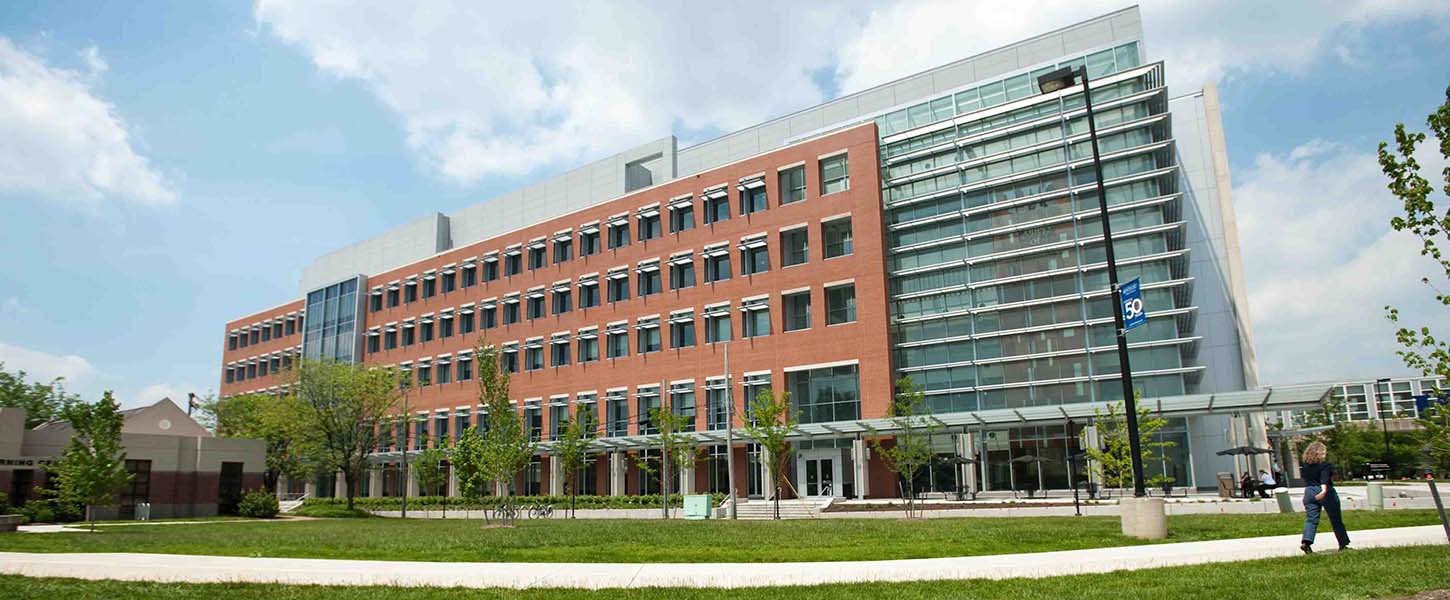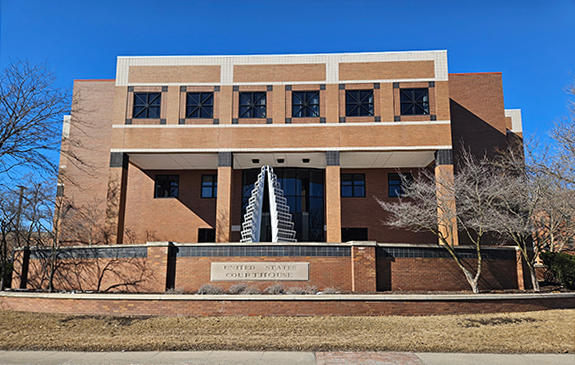
The GSA hired GBA to provide re-commissioning of the ventilation systems for six buildings in Illinois and Michigan. The scope of the project was to ensure that each of the buildings in question receive adequate ventilation air through the building systems to ensure a healthy environment for the building occupants, meeting ASHRAE 62.1 standards for airflows. Ventilation was top-of-mind, particularly in the aftermath of the COVID 19 pandemic. The projects were executed under three different task orders over a one-year period.
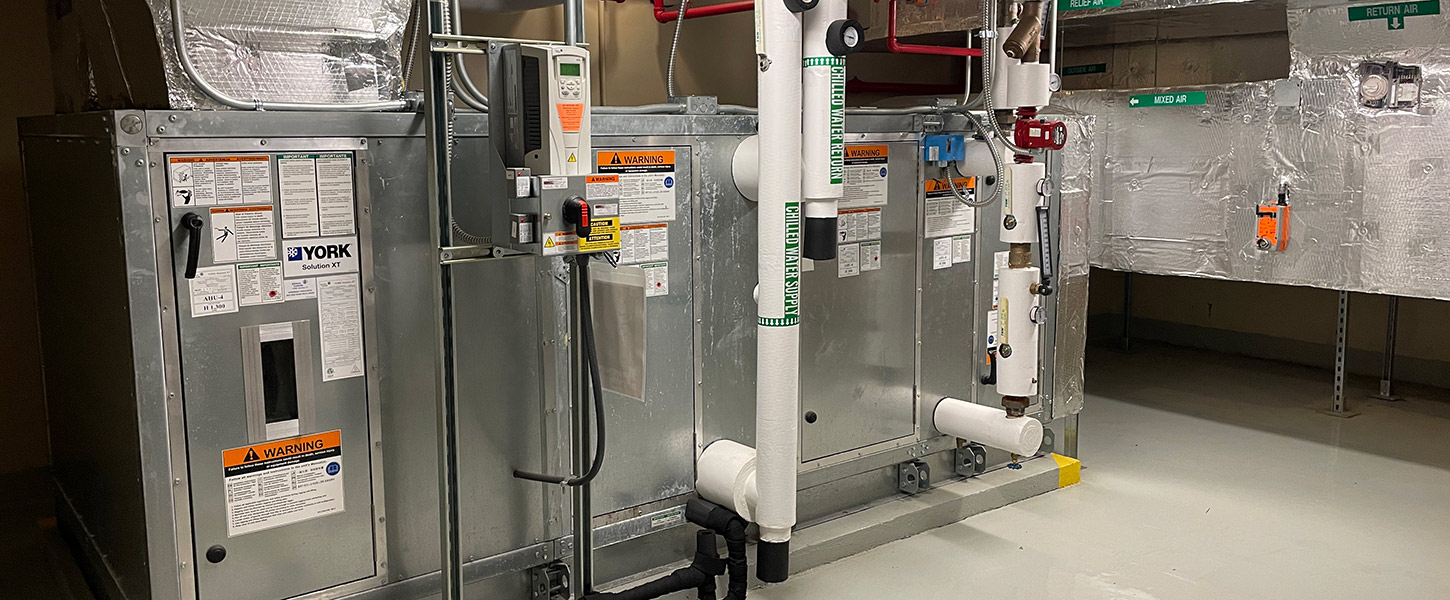
GBA engineers first performed a physical assessment, which involved a survey to determine the configuration of each building’s ventilation system and to evaluate the condition of all air-handling units. This initial assessment provided input for later calculations and testing.
As a second step, GBA commissioning engineers worked with a Test and Balance (TAB) contractor and each building’s building automation system (BAS) contractor—both contractors working as consultants to GBA—to perform functional testing and airflow measurements on each AHU and identify any operational issues. Problems identified included inoperable outside air dampers, faulty damper actuators, improper setpoints and sequences of operations, airflow measurement stations (AFMS) that were out of calibration, and disabled controls. Any operational or equipment issues were shared with the GSA and the operation and maintenance (O&M) contractors at each building. Depending on the type of issue and associated remedial costs, some problems were addressed while others became a long-term issue for the facility to resolve. Any issues that directly impacted control of ventilation air were addressed.
The next step involved GBA engineers calculating the required ventilation rate for each AHU. Using the ASHRAE 62.1-2022 methodology, the fresh air requirements for each space in the building were calculated and were tallied for each AHU. The heating and cooling capacity for each unit was reviewed to ensure that dded fresh air would not negatively affect performance. Based on these calculations, AHU ventilation air re-balancing scope and revised ventilation airflow rate setpoints were developed.
The last step of the process was to re-balance the fresh air quantities for each AHU and re-commission the units. GBA commissioning engineers directed the airflow and sequence of operation adjustments performed by the BAS and TAB contractors and performed final testing to ensure that the units operated as required.
As a result of the project, the building’s ventilation systems are providing code-required ventilation air to the building occupants, as many AHUs were previously providing insufficient air. Additionally, GSA project management and property management received a better understanding of the current status, condition, and controls configuration of the buildings’ AHUs, which provided input for master planning.
Since each facility had a different controls system, and the facilities had different BAS contractors, the project was particularly challenging. In some cases, the current BAS contractor did not have access to legacy equipment, so an additional BAS contractor had to be hired to assist with the adjustments. Project management and coordination of GBA staff, GSA project managers, local GSA facilities managers, O&M support staff, and the TAB and BAS contractors were a key factor in the successful execution of the project.