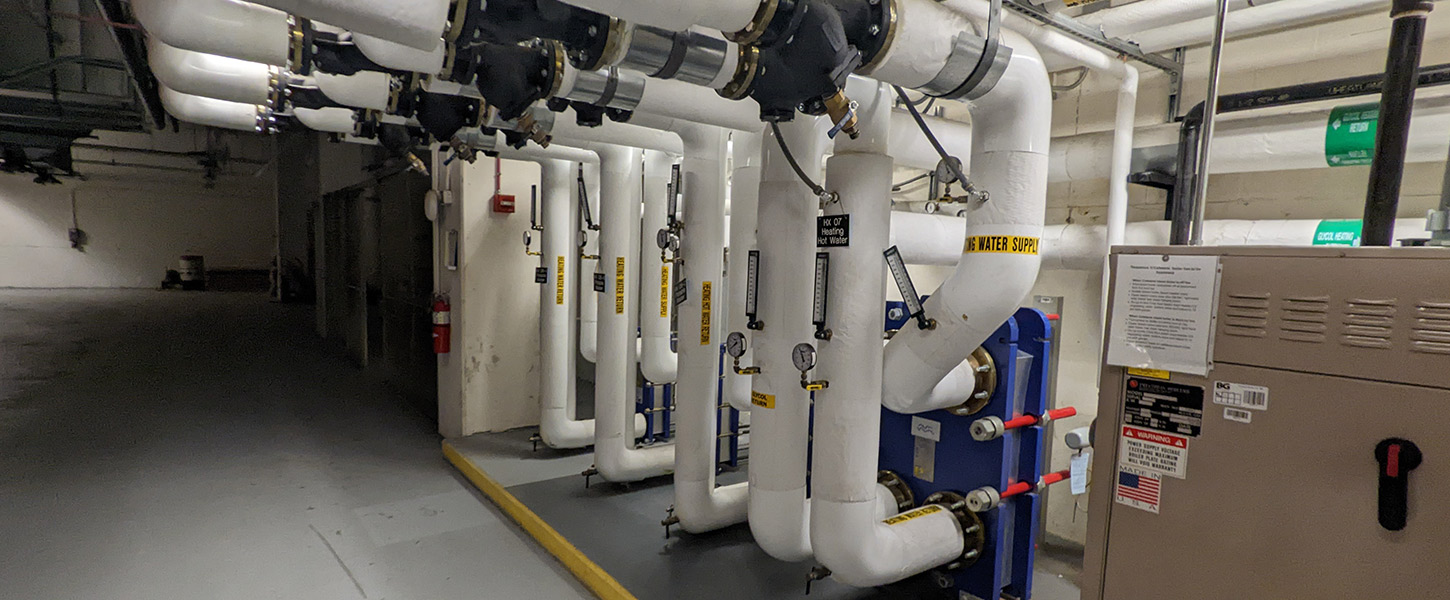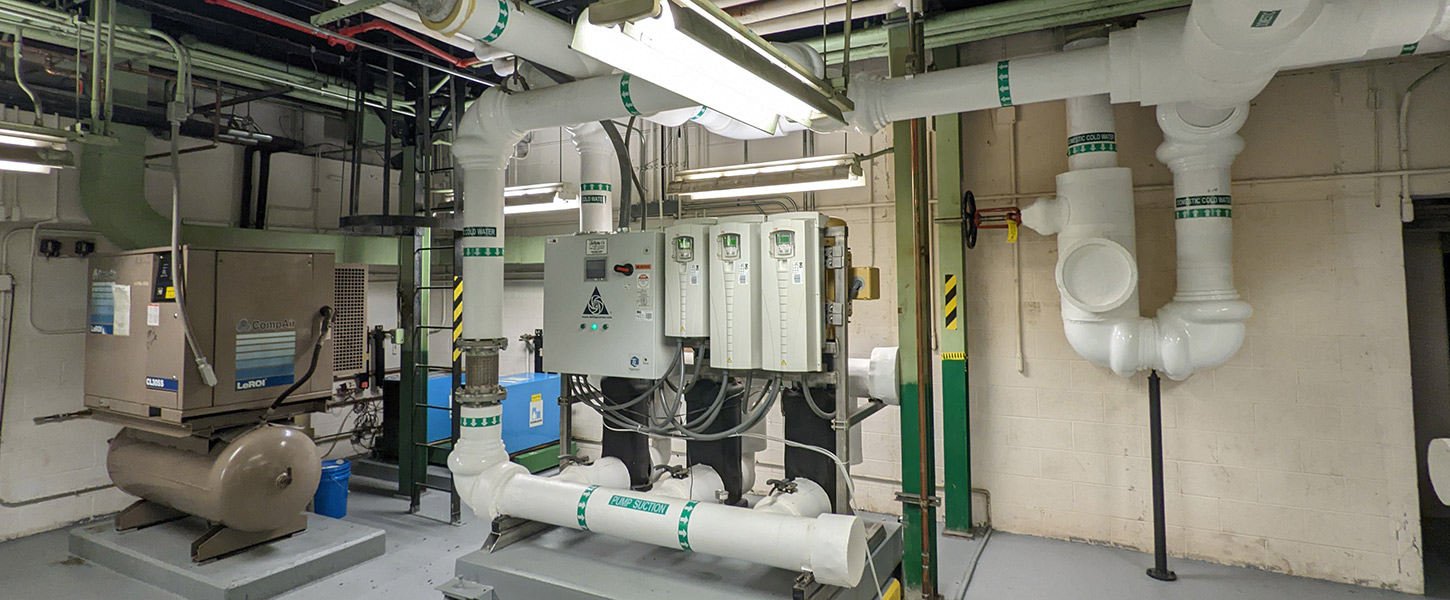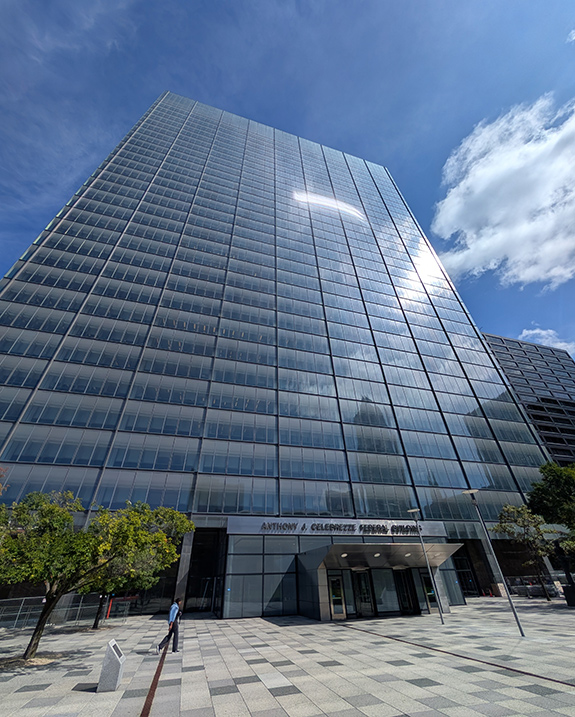
The GSA engaged GBA, as part of an A/E team, to evaluate the condition of the Celebrezze building’s domestic water system and to suggest replacement options. High lead levels had been detected in some of the plumbing fixtures, adding urgency to the effort. The existing piping included brass and galvanized piping, and some of the older fixtures still contained lead.
The study included surveying and recording the domestic water piping from the points of entry to the lower levels of mechanical spaces and the high-rise zones. GBA provided a road map and recommendations for possible phasing, along with cost estimates.
The GSA later engaged GBA to prepare design documents for replacing parts of the domestic water system, focusing on piping from the incoming service through the mezzanine level. High-rise piping is expected to be addressed later.
The design included all work associated with the piping replacement, including restoration of the existing plaza, ceiling removal and reinstallation, and replacement of fixtures in the areas affected by the piping replacement. The design documents included extensive photographic documentation to ensure that bidding contractors understood existing site conditions that would greatly affect pricing. Additionally, complete life safety plans were prepared to ensure that safe exit paths were maintained during the installation.
Redesign of the incoming water service was an important aspect of the project. The building originally had two separate incoming water services from different city water mains. Given the arrangement of the piping, one of the two services chronically experienced insufficient flow and was susceptible to becoming stagnant: an undesirable condition.
GBA and its consultants worked with the Cleveland Department of Water to initiate changes, so the building now has a dual water service fed from a single city water main. The second service was used to supply domestic water to the building during replacement of the main water service. The project also included new meter vaults in the entry plaza and new reduced-pressure backflow prevention devices.